David R. LengOutsourced Chief Risk Officer · Author · Speaker

Results

Stories of businesses that prepared, recovered and got better

Every one of these owners had insurance and an agent. These stories show what changed in operations, coverage and recovery: the decisions made before a loss, the work during it, and what followed. Where something didn’t go to plan, it’s in the story too.

The blind spot

Two fires, two businesses still open

A blind spot is an exposure that was missed or misread: never looked at, or looked at and understood wrong. Both of these owners were insured before we met. Our review found the gap between their programs and what it would take to rebuild, keep their people and get the business back.

Manufacturing · Apollo, Pennsylvania

Everyone got out. Three weeks earlier, there was no evacuation plan.

The air horn went off a little after seven in the morning. Marianne, the office manager, figured it was another drill. They had run four in the three weeks since the evacuation plan went in. Then she saw people running to the meeting spot, not walking, and turned around. Smoke was pouring out of the building.

Five minutes after the horn sounded, the roof came down. All 33 employees were already outside.

WTAE-TV Pittsburgh news coverage of the CCF fire, April 2014
Ken Clifton looking back seven years later, from Duncan Financial Group

Ken Clifton started CCF Industries in 1995, building custom cabinetry in his family’s garage. By 2014 it was a 19,000-square-foot plant making dovetail drawer boxes. Ken was on a golf trip in Florida when the alarm company called.

He had brought us in about eight months earlier, worried about people getting hurt around the power equipment. The plant had a fire alarm but nothing you could hear inside, so our safety professional mounted air horns on the walls and built the evacuation plan around them. We also changed the morning startup. Sweep up the dust that settled overnight, then turn on the dust collection system. That morning an employee came in early to finish a job, the dust collector was already running, and the steps got skipped. A spark from his air nozzle lit a spray booth filter. The booth’s suppression system misfired, and the dust collector pulled the burning particles into the ducts.

The procedures didn’t stop the fire. The drills got everyone out. Ken is still in business and doing well, and I’m proud of that. That nobody got hurt matters to me just as much.

His insurance had been rebuilt too. Ken had been with his old agent for more than ten years, the one everybody in his industry used, and nobody who quoted against it could beat the price. Under that program he would have been about $1.3 million short just to rebuild. Worse, he would have been more than $2 million short of what it took to keep the business afloat and hold onto his customers while he did. Over $3 million he didn’t have. We raised the building limit, brought the foundations, spray booth and dust collection system into the definition of building, added about $500,000 for code upgrades, and rewrote his business income to last through a long shutdown. The drop in his workers’ comp premium from the safety work paid for most of it.

It was an $8.3 million loss. Investigations held the site for months, and one of the hardest winters in years froze the mud inside the shell. There was no temporary plant to move into. Every available building nearby needed more than $1 million in improvements before the municipality would issue an occupancy permit. So Ken farmed out production to more than a dozen manufacturers, one of them in Arizona, and held onto about 60% of his business that way. Three months in, the business income adjuster called to shut that down because it cost too much. I had the adjuster on a call that afternoon. Extra expense coverage is there to reduce the damage to Ken’s business, not the insurance company’s bill. He went back to the policy and apologized.

Not everything was covered. A modern, airtight building needed a much bigger HVAC system, and the code work ran about $140,000 past our $500,000 estimate. That was 1.7% of an $8.3 million loss, close enough for Ken to afford to rebuild. Under his old program, he couldn’t have afforded to rebuild at all. On September 21, 2015, Ken and his team moved into a new, larger plant, with most of their customers still with them. Ken later wrote the foreword to Insured to Fail.

“David took the time to understand what our needs were, and totally changed our insurance program. I would be out of business today if it wasn't for David Leng and Duncan.”

Ken Clifton, OwnerCCF Industries

An earlier version of this story ran on Duncan’s Premium Reduction Center.
Total loss$8.3M
Coverage gaps closed before the fire$1.3M to rebuild, $2M+ to stay afloat
Employees hurtNone
Orders kept through outsourcingAbout 60%
New plant openedSeptember 21, 2015

Truck and auto body repair

The adjuster told him to put everyone on unemployment

A month after the fire, the adjuster sat down with Jack Kirsopp and told him to lay off his crew. File for unemployment. It would save the insurance company money.

Jack had 18 people, most of them with the shop for more than 15 years. Good body mechanics who can work on tractor-trailers are hard to find, and he knew if they went on unemployment, most of them would go somewhere else. We said no. Six months earlier, when we took over his account, we had written his business income coverage to include ordinary payroll for every one of them. None of them missed a paycheck in the 9½ months it took to rebuild.

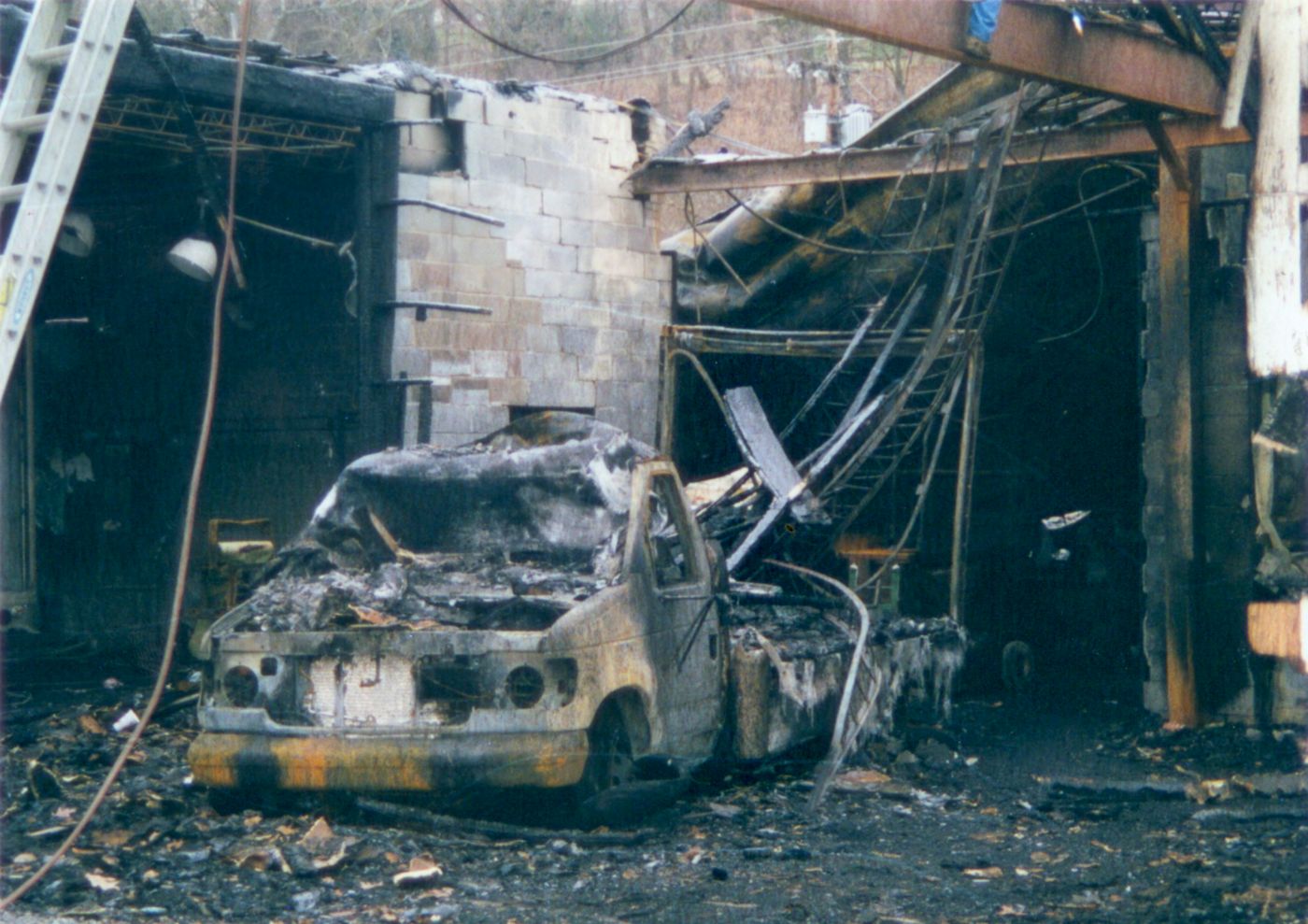
The fire started in a three-year-old furnace on the night of November 14, 1997. It brought down the roof and most of the walls and destroyed everything inside, trucks included. The fire marshal held the site for about 75 days. There was nowhere to go in the meantime. Nothing nearby could take a 100-foot spray booth, and none of the surrounding communities wanted a truck shop.

What saved Jack was what we found before any of that. His old agent had the building insured for $274,000. Every agent who quoted it just copied that number, year after year. It would have cost $865,000 to rebuild the same building. The building also sat in a floodplain, so a rebuild had to be raised. It was too close to the property line, so it had to move. Code now required a sprinklered spray booth. A standard policy pays to rebuild what was there, not what the code demands, and we put that gap at close to half a million dollars. Moving the building also meant a new foundation, which the standard policy doesn’t cover at all. We added both.

It still didn’t go perfectly. The soil under the new site was soft, and the building needed caissons driven 18 feet down to rock. About $75,000 nobody saw coming, and the code coverage picked it up. Then, after the fire, the community passed an ordinance requiring a decorative front. Another $60,000. The forms back then didn’t cover a code passed after the loss. Jack paid about $80,000 out of pocket on a $3.5 million fire, most of it for that front. Today that gap can be covered, and we build for it. Then, it could not.

He reopened to a backlog of work, in a shop laid out better than the old one, and turned out the same work with one fewer person. His daughter owns the business today.

The shop the morning after the November 1997 fire.
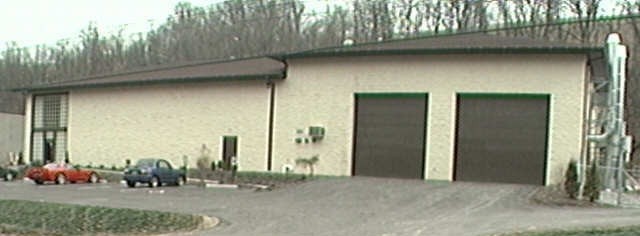
The rebuilt shop, raised out of the floodplain and back at work.

“When I look back at my old insurance policies, I now realize that if it were up to typical agents and the terrible traditional quoting process… I would be out of business today.”

Jack Kirsopp, OwnerKirsopp Auto Body
Old building limit$274,000
Cost to rebuild as it was$865,000
Total lossAbout $3.5M
PayrollEvery employee paid for 9½ months

Auto repair · 8 employees

The code officer said the walls that never burned had to come down too

On a Sunday in June 2004, Tony Vecchio came in to weld a patch under a friend’s pickup so it would pass inspection the next morning. He did his 45-minute fire watch, then walked across the street for lunch. Half an hour later, the waitress ran over. Smoke was pouring out of his building.

The fire company got it under control, but not before the roof fell in and pushed the front wall out. Tony moved fast. Within three weeks he was working out of a closed repair shop half a mile down the road, lifts still in place, and a friendly competitor handled his state inspections until his new license came through. The adjuster said it was one of the quickest reopenings he had seen.

Then the code officer looked at the building. With the front wall and roof gone, and the foundation cracked, the whole structure had to come down and be rebuilt from the ground up, including the three walls that never burned. The contractor put the undamaged portion at about $204,000, nearly half the cost to rebuild. Tearing it down and digging it out added another $38,000. A standard property policy doesn’t pay for either.

Before the fire, when we compared programs with Tony, two of them looked almost the same. One had $50,000, combined, for all of his building code costs. The other covered the undamaged portion up to the full building limit, plus more for demolition and code upgrades. It cost about $1,000 more a year. Tony took it.

Under the cheaper program, he would have been about $192,000 short. He was back in his own building in about nine and a half months.

Temporary shop openIn 3 weeks
Out of his buildingAbout 9½ months
Code costs on the undamaged wallsAbout $242,000
Premium difference that covered itAbout $1,000 a year

The repeat problem

Same injury, same cost, every year, until the process changed

Neither company had bad luck. They had a pattern. Once it was traced to the process behind it, the injuries fell, and the mod and premium followed a year or two later. Both are completed engagements, so the numbers are historical.

Home healthcare · 200+ employees

The new caregivers kept getting hurt

Sixteen injuries a year, a 1.516 mod, and a renewal of $421,000.

Then we lined the claims up by hire date. A big share of them came in a caregiver’s first few weeks. The assessment traced it to how caregivers were hired and prepared for the physical demands of the job.

Two more things showed up. Caregivers were walking into unsafe conditions inside patients’ homes with no plan for what to do about it. And the agency had few options for suitable work during recovery, so injuries turned into lost time.

They added fitness-for-duty exams before hire and a drug-free workplace program. A home safety checklist, with clear steps when a home isn’t safe. A formal safety committee, a review of recurring injuries and the conditions behind them, and alternative work so an injured caregiver stayed on the payroll.

Injuries went from 16 to 10, then 5, and then ran one or two a year for the next four years. Claim costs averaged $14,100 a year over that stretch. The mod came down to 0.925 and the premium to $172,000.

An earlier version of this story ran on Duncan’s Premium Reduction Center.
Injuries a year16 → 1 or 2
Experience mod1.516 → 0.925
Claim cost a year$211,300 → $14,100
Premium$421,000 renewal → $172,000

Auto dealer group · 700 employees

A $1.6 million renewal, and 46 injuries a year behind it

The renewal offer was $1,647,000. For a dealer group, that’s a lot of cars.

We got the first renewal down to $639,000. I want to be straight about that number. It was cut from an offer the carrier had inflated because of the losses, not from the prior year’s premium. Negotiation buys you a year. It doesn’t change what’s producing 46 injuries.

That took the operation. Hiring changed, and a drug-free policy went in. A formal safety committee went in, along with behavior-based safety, OSHA compliance and HR support. Claims were managed while they were still open. We reviewed recurring injuries and the tasks behind them, and arranged suitable work for injured employees during recovery.

Injuries went from 46 to 10 in the first year, then 5, then 1, then a full year with none. Claim costs averaged $12,600 a year over five years. The mod dropped to 0.749 and the premium to $284,000. That second drop followed years of changes in injuries, claims handling and the mod.

An earlier version of this story ran on Duncan’s Premium Reduction Center.

Injuries a year46 → none for a full year
Experience mod1.403 → 0.749
Claim cost a year$506,900 → $12,600 avg.
Premium$1,647,000 offer → $284,000

Public entity?  Read the school district story

Across the program

What changed for clients who stayed at least two years

61%fewer employee injuries
78%fewer lost-time injuries
93%lower injury costs
$70M+saved in premiums and overcharges since 2004

The injury figures cover clients who stayed in the Risk Profile Improvement Process for at least two full years, compiled by an outside accounting firm. They are historical results for that group. Your results will depend on your operation, your loss history and the market.

What leadership sees

The Executive Briefing

Once a year at least, the owner and CFO see how the company’s total cost of risk is moving, in dollars and as a share of revenue. A growing company can pay more premium every year and still be getting better. What matters is whether the cost grows slower than the business, what’s driving the difference, and what to work on next. This sample uses a made-up 140-person distributor.

The cost of risk against revenue

MeasureYear 1Year 2Year 3
Revenue$20,000,000$23,000,000$26,000,000
Insurance premiums$500,000$540,000$570,000
Premium per $100 of revenue$2.50$2.35$2.19
Total cost of risk$800,000$830,000$850,000
Total cost of risk per $100 of revenue$4.00$3.61$3.27

Revenue grew 30%. Premiums grew 14%, and the total cost of risk about 6%. The company spends more dollars on risk and keeps more of every dollar it brings in. Payroll, hours and vehicle counts sit underneath this, so we can tell real improvement apart from a pricing change or a shift in business mix.

Total cost of risk is premiums, plus retained and uninsured losses, plus the cost of running the risk program. Claims the insurance already paid aren’t counted twice.

Workers’ comp detail

The briefing then breaks each major line down. Here is the workers’ comp page.

MeasureNumberWhat it meansDecision
Experience mod1.24The premium the mod applies to is 24% higher than it would be at an average 1.00 mod. 
Lowest mod you could reach0.71Your mod with no claims for three years. Payroll and class set it, not luck. This is the floor to measure against. 
Controllable gap0.53, about $106,000 a yearThe premium between your current mod and a theoretical claim-free mod. It shows the size of the opportunity, not a saving anyone can promise.Illustrative target: 0.95 within two renewals, reviewed against updated payroll and losses.
Actual vs. expected losses$310,000 vs. $190,000 over three yearsClaims ran 63% above what the rating bureau expects for your payroll. 
Estimated premium effect of a claimAbout $1.80 per $1 of lossAn illustrative estimate of the added premium one dollar of loss produces across the renewals it affects. The real number varies by employer and by claim.Price every fix against this, not against the claim check.
Where the dollars come from41% from strains in the first 90 days, warehouseOne department and one kind of employee drive most of the cost.Change warehouse onboarding first.
Trend, sized to headcountInjuries per 100 workers: 9.1, 7.4, 5.2Improving faster than the mod shows. The mod is built on several prior years of losses, so recent gains take time to show up fully.Put this in the renewal story for the underwriter.

Illustrative only. The company and figures are invented to show the format. Workers’ comp premium before the mod is assumed at $200,000.

Open decisions for leadership

Beyond workers’ comp, the briefing ends with the decisions only leadership can make: what the exposure is, what it could cost, who owns it and by when.

ExposureWhat it could costActionOwner and date
One supplier makes 70% of the packaging, with no second sourceAbout $1.4M in lost gross profit if they’re down 90 days. Your business income policy may not respond to a fire at their plant.Qualify a second supplier. Price dependent property coverage.VP Operations, by June 30
A new customer contract asks you to indemnify them for their own negligenceA claim your liability policy may not fully coverNegotiate the clause, and confirm with the carrier what the policy picks upCFO with counsel, before signing
Three drivers with two or more moving violationsSurcharges or exclusions at renewal, and one serious crash could go past the auto limitRetrain or reassign. Review the umbrella limit.Operations manager, by March 31

Illustrative only, for the same invented company.

In their words

What clients say

“Working with Duncan we were able to enhance the safety culture in our organization and reduced our Workers’ Compensation costs by over $300,000 a year.”

Gary Bowser, IIBowser Automotive Group

“David Leng is very knowledgeable about Workers’ Compensation and a pleasure to work with. His knowledge allowed our company to reduce its Workers’ Compensation premiums by almost 55%.”

Mike SpitznagelJetNet Corporation

“David’s knowledge of Workers’ Compensation blew me away when he came in and uncovered $42,000 in overcharges.”

Alex YawneyOdyssey Communications

“I took the opportunity to meet with David to discuss better ways we could handle not only our Work Comp claims, but how we needed to drastically overhaul our HR processes. The benefits have been multitude. I have great confidence in David Leng and his ability to help businesses turn around their HR practice in ways that ultimately can make a company more profitable.”

Colleen MaizeKasto, Inc.

“First, he found and recovered $86,000 in errors that my old agent allowed to occur over two years, which no other agent saw. Second, David and his team overhauled our employee hiring, training and management processes. His approach reduced our workers’ compensation premium by 41%, in addition to correcting our premium errors. David and his team did a remarkable job. He literally kept us alive, and now is helping us to thrive!”

Mark Duda, PresidentDuda Cable Construction

“The Duncan Group came in seven months prior to my renewal and took the time to meet with me and my staff, understand my business, and identify the risks I had in my operation. They put together programs to address these risks and then helped me to avoid those I should not have, let me keep the ones I could afford, and then designed my insurance program to address those risks that needed to be insured. And, they reduced my insurance costs as well. … My business is thriving and I am now able to hand this company over to my daughter and eventually my grandsons.”

Jack Kirsopp, OwnerKirsopp Auto Body

“Within a few short months you have already exceeded my expectations. To start, you improved our insurance coverage and uncovered and corrected a mistake in our Work Comp policy which allowed us to receive a credit of $23,453 from our prior policies and a reduction in our renewal premium of over $40,000. Your hands-on, pro-active approach is helping Kehoe Construction become a healthier, more profitable company.”

Steven Kehoe, PresidentKehoe Construction, Inc.

“Your extensive knowledge of the Work Comp system helped us realize there are effective ways to significantly reduce our Workers Compensation cost without having to solely depend on an insurance company to provide us a cheap quote. Even though our payrolls increased, we are enjoying a $13,000 premium savings compared to last year.”

Burdumy Motors, Inc.Authorized Volvo Retailer

“After working with your team for just about a half a year, you dramatically improved the safety of our operation and very quickly reduced our injury frequency. Most importantly, you negotiated with our insurance company and took us from a 15% surcharge to a 15% credit. That’s a 30% drop in our rates!”

Bob Mincin, PresidentMincin Insulation Services

Moving from a 15% surcharge to a 15% credit is a 30-percentage-point change.

“Nine months ago I hired Duncan to implement their Risk Solutions Program. They met with me and my employees, toured my facility and put together an aggressive plan. Working together, we have now taken back control of what was an “out of control” Workers Compensation Program. I saved 42% of my premium at my very next renewal.”

Robert Gottlieb, PresidentGottlieb, Inc.

“In addition to making my life easier by helping to manage our claims, your team helped us create a very strong safety culture. Our injuries are down significantly, but more importantly, you helped reduce our work comp premium by over $80,000 a year.”

Lori BodnarC. Harper Automotive Group

“I just can’t thank you enough for finding and returning to us the $27,438 in overcharges from our last two years of audits. More importantly, you provided us a process so that we can avoid being overcharged in the future by the insurance companies.”

Ralph KempELK Air Conditioning

“Throughout David’s career he has always been on the forefront of thinking. His understanding of insurance and specifically workers compensation allows him to see things and establish practices that others eventually follow. David takes an entrepreneurial approach to problem solving resulting in both savings and added protection for his customers.”

J. Kieran Jennings, Esq.Siegel Jennings

These stories are Duncan Financial Group engagements, carried out with our risk management team. Results depend on each company's operations, loss history and market conditions.

Start a conversation   How the work runs

Something in the business that doesn't add up?

A claim that won't close, a contract you're about to sign, growth that's outrunning the safety program, a renewal, or a question about whether you'd make it through a shutdown. Send me what you're looking at. If I can help I'll tell you how. If I can't I'll tell you that too.

Start a conversation